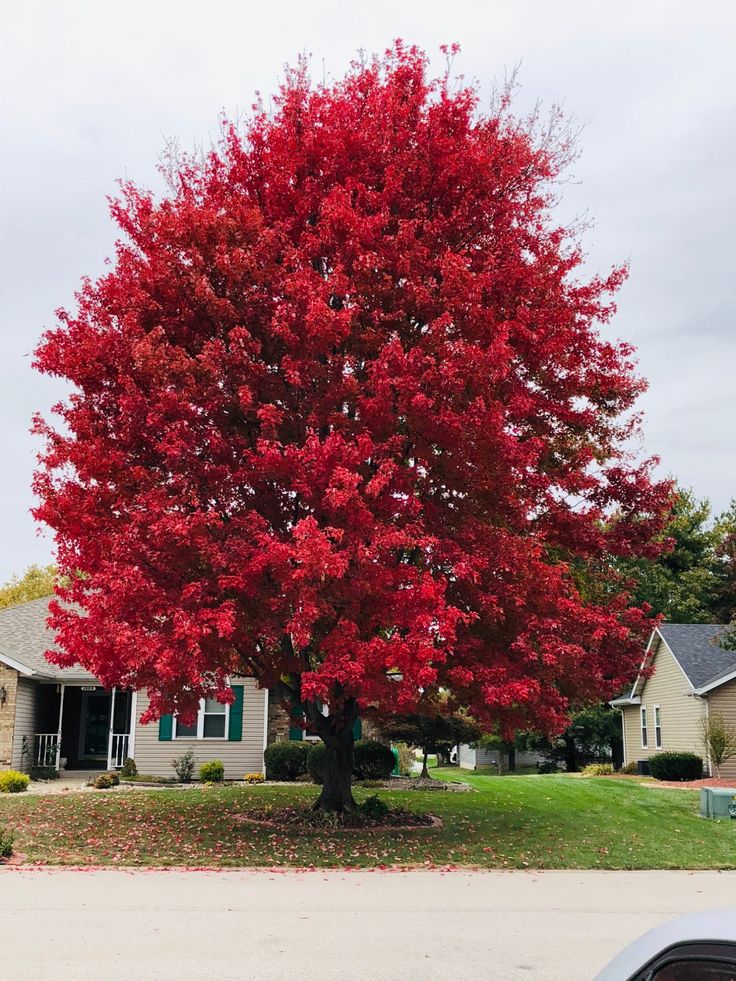
Texas Red Oaks
Texas Red Oak (Quercus buckleyi), also known as Buckley Oak or Shumard Red Oak, is a medium-sized deciduous tree native to central Texas and parts of the southern United States. It is prized for its beautiful fall foliage, resilience in tough growing conditions, and the valuable shade it provides. Here’s an in-depth look at Texas Red Oaks:
1. Appearance
Size: Texas Red Oaks typically reach heights of 30–50 feet, but under ideal conditions, they can grow up to 75 feet tall with a spread of 40–50 feet.
Trunk: The tree has a straight trunk with a broad, rounded crown that becomes more open as it matures. The bark is dark gray or black and becomes deeply furrowed with age.
Leaves: The leaves are 4–8 inches long with 5–7 deeply lobed, pointed lobes that resemble the classic oak leaf shape. In the fall, the leaves turn vibrant shades of red, orange, and yellow, making this tree a stunning ornamental choice.
Acorns: The tree produces small acorns, ¾ to 1 inch in length, which are round and brown with a small, shallow cap. These acorns are a food source for various wildlife species.
2. Habitat and Range
Native Regions: Texas Red Oaks are native to central Texas, northern Mexico, and parts of Oklahoma. They are well-adapted to the rocky, limestone-rich soils of the Edwards Plateau and nearby areas.
Climate: The tree thrives in warm, dry climates and is highly tolerant of drought conditions once established. It prefers areas with hot summers and mild to moderate winters.
Soil: Texas Red Oak prefers well-drained soils, especially rocky limestone or calcareous soils. It can also tolerate sandy or loamy soils, though it struggles in poorly drained, heavy clay soils.
3. Ecological Importance
Wildlife Support: Texas Red Oaks provide food and shelter for various wildlife. Acorns are eaten by birds, squirrels, and deer, while the tree itself provides habitat for birds and other small animals.
Pollinators: Although oaks are wind-pollinated, they contribute to the broader ecosystem by supporting a wide range of insect species that feed on the tree’s leaves, bark, and wood.
Erosion Control: The tree’s extensive root system helps stabilize the soil and prevent erosion, particularly in rocky and hilly areas.
4. Uses
Landscaping: Texas Red Oak is a popular landscaping choice because of its vibrant fall color, shade-providing canopy, and adaptability to challenging soil conditions. It is often planted in parks, large yards, and public spaces.
Wood: The wood of the Texas Red Oak is hard and dense, making it useful for furniture, flooring, and construction materials. However, it is not as commercially important as other oak species.
Cultural Significance: The tree is often appreciated in Texas for its aesthetic beauty and as a symbol of strength and endurance, particularly in harsh growing conditions.
Shade and Cooling: With its large canopy, Texas Red Oaks are excellent at providing shade in urban areas, helping to reduce heat and create cooler environments.
5. Conservation and Threats
Drought Tolerance: Texas Red Oaks are highly drought-tolerant once established, making them well-suited to arid regions. However, young trees benefit from regular watering until their root systems are well-developed.
Pests and Diseases: One of the major threats to Texas Red Oaks is oak wilt, a fungal disease that can spread through root systems or insect vectors. Once infected, the tree’s vascular system is compromised, often leading to death. Preventing oak wilt involves managing pruning times (avoiding spring and summer), using clean pruning tools, and keeping infected trees away from healthy ones.
Urbanization: Habitat loss due to urban expansion and construction has affected the natural range of Texas Red Oaks. However, their adaptability to urban environments makes them a resilient choice for cities.
6. Cultivation and Care
Propagation: Texas Red Oaks are typically propagated from acorns, which germinate easily. The tree grows relatively quickly for an oak, with an average growth rate of 1–2 feet per year.
Watering: Although drought-tolerant, young trees should be watered regularly during their first few years to ensure deep root establishment.
Pruning: Prune Texas Red Oaks in the fall or winter to avoid oak wilt. Dead or diseased branches should be removed, and the tree should be shaped while young to promote strong branching.
Growth Conditions: The tree prefers full sun to partial shade and requires well-drained soils. In urban areas, it can be grown in poor soils as long as drainage is adequate.
7. Role in Reforestation and Urban Forestry
Reforestation: Texas Red Oak is an important species in restoring natural landscapes in the southern United States, particularly in areas affected by deforestation or desertification.
Urban Planting: The tree’s adaptability to hot, dry climates and urban settings makes it a valuable choice for cities and towns seeking resilient, low-maintenance trees that can provide shade and visual appeal.
In summary, Texas Red Oak is a versatile and beautiful tree well-suited to a variety of landscapes, particularly in dry, rocky areas. Its stunning fall colors, ecological benefits, and adaptability make it a valuable addition to both natural ecosystems and urban environments.