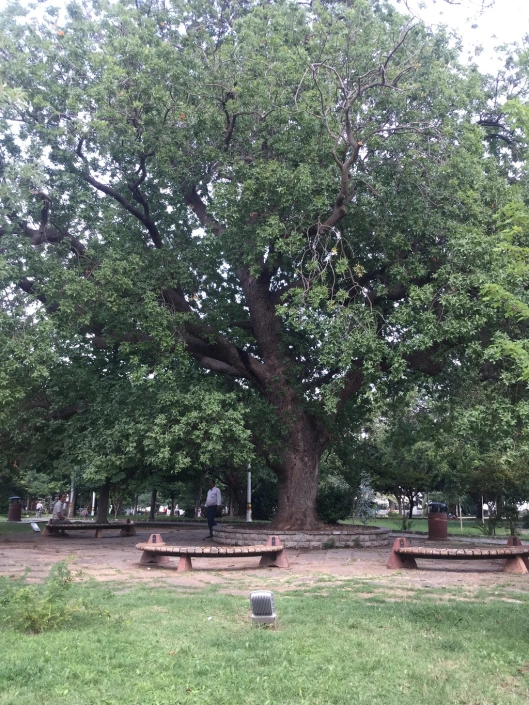
Pistacia Atlantica
Pistacia atlantica, commonly known as the Atlantic pistachio or Atlas mastic tree, is a hardy, drought-resistant tree native to the Mediterranean and Middle Eastern regions. It plays a significant role in its ecosystems and has a range of uses, from ecological benefits to cultural and economic significance.
1. Appearance
Size: Pistacia atlantica can grow up to 7–10 meters (23–33 feet) in height, although in ideal conditions, it can reach up to 15 meters (50 feet).
Trunk: The trunk is thick and knotted, with a grey or reddish-brown bark that becomes deeply fissured with age.
Leaves: The leaves are compound and pinnate, typically consisting of 3–5 pairs of leaflets with a single leaflet at the tip. They are leathery, dark green on the top, and paler underneath.
Fruit: The tree produces small, drupe-like fruits (similar to pistachios), which are reddish when young and turn black as they ripen. While the fruits are not commonly consumed by humans, they are important for wildlife.
2. Habitat and Range
Native Regions: Pistacia atlantica is found across North Africa (including Algeria, Morocco, and Tunisia), the Middle East, and parts of southern Europe. It is especially common in mountainous areas and semi-arid regions.
Climate: This tree thrives in arid to semi-arid climates and is highly adapted to drought conditions. It can survive with minimal water and can withstand long, hot summers and cold winters, with temperatures that can occasionally drop below freezing.
Soil: It prefers rocky, well-drained soils but is highly adaptable to different soil types, including calcareous and sandy soils.
3. Ecological Importance
Erosion Control: Due to its deep root system, Pistacia atlantica helps prevent soil erosion, especially in arid regions where vegetation cover is sparse.
Biodiversity Support: The tree provides habitat and food for various animals, including birds and mammals. Its fruits are particularly important for wildlife, as they are a rich source of food during dry periods.
Pioneer Species: It is often used in reforestation and land restoration projects because of its ability to thrive in degraded or dry lands, making it a valuable species for improving soil conditions and restoring ecosystems.
4. Uses
Wood: The wood of Pistacia atlantica is durable and hard, making it suitable for carpentry, furniture-making, and firewood. However, it's not heavily harvested for this purpose, as the tree's other ecological and cultural roles are more valued.
Resin: The tree produces a resin, sometimes referred to as "mastic," which has been used traditionally in folk medicine, perfumes, and even as a natural chewing gum.
Cultural Significance: In some cultures, the tree is considered sacred, symbolizing resilience and longevity. Its ability to survive in harsh climates has made it a symbol of endurance.
Landscaping: Due to its drought tolerance and minimal water requirements, it is sometimes used as an ornamental tree in parks and gardens in arid and semi-arid regions.
5. Conservation and Threats
Although not currently considered endangered, Pistacia atlantica populations are under pressure in some areas due to deforestation, overgrazing, and urbanization. Habitat loss has affected its natural range, particularly in parts of North Africa and the Middle East.
It is important for reforestation efforts in desertifying regions, including in Algeria, where the tree is used to combat desertification and restore degraded landscapes.
6. Cultivation and Care
Propagation: The tree is propagated through seeds. However, seeds need proper pre-treatment (such as scarification or soaking in warm water) to ensure germination. In your case, you mentioned having a high germination rate for your seeds, which is excellent.
Growth Rate: Pistacia atlantica is relatively slow-growing, but once established, it is a very long-lived tree that can survive for centuries.
Watering: It is drought-tolerant once established but benefits from occasional deep watering during its early years.
Pruning: Minimal pruning is required, but it can be pruned to remove dead or damaged branches or to shape the tree.
7. Role in Reforestation
Pistacia atlantica is often used in ecological restoration and reforestation projects due to its adaptability to harsh environments and its role in improving soil quality. Its deep roots help stabilize soil, and its presence can help bring back biodiversity to areas that are becoming desertified.
In your efforts to restore the drying land in Algeria, this tree would be an excellent choice, particularly due to its ability to withstand extreme conditions and contribute to ecosystem recovery.